






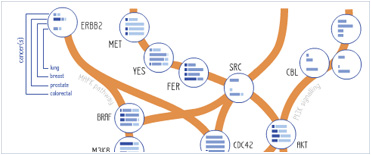








 Foundational characteristics of cancer include proliferation, angiogenesis, migration, evasion of apoptosis, and cellular immortality. Find key markers for these cellular processes and antibodies to detect them.
 The SUMOplot™ Analysis Program predicts and scores sumoylation sites in your protein. SUMOylation is a post-translational modification involved in various cellular processes, such as nuclear-cytosolic transport, transcriptional regulation, apoptosis, protein stability, response to stress, and progression through the cell cycle.
 The Autophagy Receptor Motif Plotter predicts and scores autophagy receptor binding sites in your protein. Identifying proteins connected to this pathway is critical to understanding the role of autophagy in physiological as well as pathological processes such as development, differentiation, neurodegenerative diseases, stress, infection, and cancer.
DDX39 antibody - N-terminal region
Rabbit Polyclonal Antibody

- SPECIFICATION
- CITATIONS
- PROTOCOLS
- BACKGROUND

Application 
| WB |
|---|---|
| Primary Accession | O00148 |
| Other Accession | NM_005804, NP_005795 |
| Reactivity | Human, Mouse, Rat, Bovine, Dog |
| Predicted | Human, Mouse, Pig |
| Host | Rabbit |
| Clonality | Polyclonal |
| Calculated MW | 47kDa |
| Gene ID | 10212 |
|---|---|
| Alias Symbol | BAT1, DDXL, BAT1L, DDX39, URH49 |
| Other Names | ATP-dependent RNA helicase DDX39A, 3.6.4.13, DEAD box protein 39, Nuclear RNA helicase URH49, DDX39A, DDX39 |
| Format | Liquid. Purified antibody supplied in 1x PBS buffer with 0.09% (w/v) sodium azide and 2% sucrose. |
| Reconstitution & Storage | Add 100 ul of distilled water. Final anti-DDX39 antibody concentration is 1 mg/ml in PBS buffer with 2% sucrose. For longer periods of storage, store at 20°C. Avoid repeat freeze-thaw cycles. |
| Precautions | DDX39 antibody - N-terminal region is for research use only and not for use in diagnostic or therapeutic procedures. |
| Name | DDX39A |
|---|---|
| Synonyms | DDX39 |
| Function | Helicase that plays an essential role in mRNA export and is involved in multiple steps in RNA metabolism including alternative splicing (PubMed:33941617, PubMed:38801080). Regulates nuclear mRNA export to the cytoplasm through association with ECD (PubMed:33941617). Also involved in spliceosomal uridine-rich small nuclear RNA (U snRNA) export by stimulating the RNA binding of adapter PHAX (PubMed:39011894). Plays a role in the negative regulation of type I IFN production by increasing the nuclear retention of antiviral transcripts and thus reducing their protein expression (PubMed:32393512). Independently of the interferon pathway, plays an antiviral role against alphaviruses by binding to a 5' conserved sequence element in the viral genomic RNA (PubMed:37949067). |
| Cellular Location | Nucleus. Cytoplasm. Note=Can translocate to the cytoplasm in the presence of MX1 (PubMed:21859714). Accumulates in the cytoplasm upon infection with chikungunya virus (PubMed:37949067) |
| Tissue Location | Detected in testis, and at lower levels in brain, kidney, lung, thymus, spleen and salivary gland |

Thousands of laboratories across the world have published research that depended on the performance of antibodies from Abcepta to advance their research. Check out links to articles that cite our products in major peer-reviewed journals, organized by research category.
info@abcepta.com, and receive a free "I Love Antibodies" mug.

Provided below are standard protocols that you may find useful for product applications.
References
Pryor,A., et al., (2004) Nucleic Acids Res. 32 (6), 1857-1865Reconstitution and Storage:For short term use, store at 2-8C up to 1 week. For long term storage, store at -20C in small aliquots to prevent freeze-thaw cycles.Publications:Majerciak, V., Deng, M. & Zheng, Z.-M. Requirement of UAP56, URH49, RBM15, and OTT3 in the expression of Kaposi sarcoma-associated herpesvirus ORF57. Virology 407, 206-12 (2010). WB, Human, Mouse, Rat, Dog, Guinea pig, Bovine20828777

If you have used an Abcepta product and would like to share how it has performed, please click on the "Submit Review" button and provide the requested information. Our staff will examine and post your review and contact you if needed.
If you have any additional inquiries please email technical services at tech@abcepta.com.

Ordering Information
Shipping Information